
Not So Great Replacement Theory
Why the Ku Klux Klan Keeps Coming Back

Here are some slogans. Tell me which decade of American history they come from: are these from the 1920s, or the 2020s?
There’s a plot to replace white people with immigrants, and it is funded by wealthy Jews.
White identity is just about preserving a civilization.
Too many Blacks are moving into the neighborhood.
Foreigners bring in diseases.
They practice bad religions, and eat dogs.
Immigration causes crime, takes our jobs, and costs us money.
“The pioneers who built America gave their own children a priority right to it, the control of it and its future.”
“There is a secret government within the government.”
Quick, buy this special clothing. But only from our authorized store!
Yup, same same.
In the 1920s the Ku Klux Klan recruited millions of members with these statements. They are all routine again today on the American right, encouraged by Donald Trump, and amplified by people like Tucker Carlson. Remember that Trump’s father, Fred Trump, was arrested at a Klan rally in 1927.
For more than a decade now, we have argued over whether Donald Tump himself is racist (yes, in my opinion), whether his administration and the structures of our society are effectively racist (um, yes), and whether the ascendant form of white Christian nationalism in this country is inherently racist (again, yes).
In other words, why America so Klanny?
You have your cruel xenophobes like Stephen Miller, cynical dividers like Steve Bannon, and amoral profiteers riding racial resentment to position in Washington. Since circa 1970, the G.O.P. has made scaring voters about “those people” into a mainstream tactic. (Before that, it was a Democrat thing.)
We are a Klan Kountry, and always have been.
The original Ku Klux Klan was created in the 1860s, to terrorize freed slaves and preserve the racial hierarchy of the defeated South. A determined north quickly suppressed that version of the Klan, but its values continued to burn for decades, in the forms of segregation, Jim Crow, and thousands of lynchings. For half a century, racialism was so integral to this country that there was effectively no need for a Klan—white legislators did the work for them.
Then something changed—immigration. New types of immigrants were altering the look of the country. Henry James was alienated by the Talmudic beards of Jews on the Lower East Side, whom he feared would dilute the Anglo-Protestant nature of the country. Immigrants from Southern Europe had the wrong religion, in the form of Catholicism. They were diseased and swarthy criminals. Especially the Italians, but even the Irish were portrayed as genetically inferior criminals (read “How the Irish Became White”).
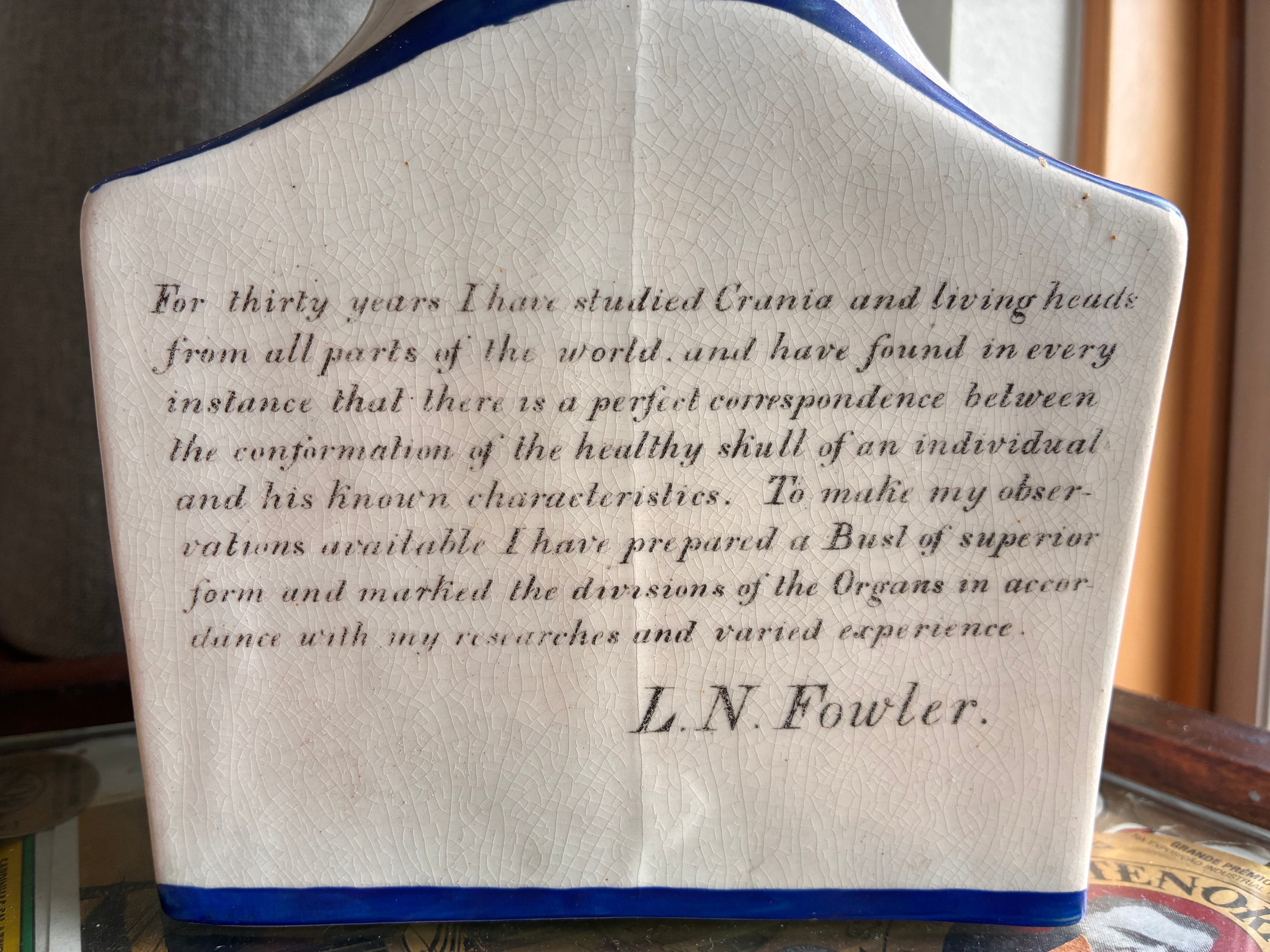
At the dawn of the 20th Century, the wealthiest men in America funded “race science” institutes, and backed eugenics policies like forced sterilization. Madison Grant, a Yale-educated zoologist, wrote a best-selling book, The Passing of the Great Race, which proved the superiority of Nordic whites. Blacks and Asians were inferior, obviously, but even southern Europeans had low, sloping foreheads that made them lazy and oversexed. Hitler called that book “my Bible.”
But the common man needed something more visceral than pseudo-scientific theories about skull shape. The Klan of the night riders rose again.
Timothy Egan, in his book A Fever in the Heartland, describes the deadly mixture of bigotry, status worry, and corruption that drove the swift rise and abrupt collapse of the second Klan in the 1920s. Millions of Americans joined, in thinly-veiled secrecy, and millions more associated with the Klan, which sent 10,000 members to march in Washington in 1928.
The new Klan was more successful in the north than the south, with twice as many members in Illinois as Alabama. In a mixture that Egan calls “half Freud, half history,” it was most popular in small towns, places hot with bigotry and boredom. People flocked to the excitement of Klan rallies, with their invented hoo-ha of mysterious rituals, fabulous titles, robes and hoods, secret handshakes, and euphemistic “illuminations” of crosses. There was a lot of social pressure to join—all the good Christians were in it. The neighbors, the mayor, the sheriff, and your old high school teacher were all Klansmen or sympathizers. Protestant pastors across America endorsed the Klan, converting the status anxiety of whites into a moralistic blood lust. Just as Americans needed to have faith in something greater, Egan notes, they needed to hate something smaller.
The new Klan was strongest in the midwest, but it flourished in Oregon too, where Black people had been banned at statehood in 1859. By the 1920s, Oregon had more Klansmen per capita than any state but Indiana—15,000 just in Portland, and chapters all over the state. Ten thousand people rallied with the Klan in Astoria in 1924, where the mayor was a sworn member. The governor, Walter Pierce, was also Klan-approved, bragging that “Every one of my ancestors has been a Protestant, for 300 years.” Pierce tried to block land sales to Japanese immigrants and close all Catholic schools. A Portland pastor, Ruben Sawyer, filled Oregon churches with anti-semitic rants. In Portland, six thousand people heard him claim that Jews controlled a secret government within the government, and that “In some parts of America, the kikes are so thick that a white man can hardly find room to walk.”
But the 1920s Klan had an Achilles heel: its moralizing Christianity. The Klan leaders recruited heavily with Christian imagery, and a patriotism soaked in Protestant salvation. And they recruited women in huge numbers by supporting prohibition and claiming to protect their virtue within a bodyguard of Christian manhood.
But what if the Klan leaders turned out to be monsters, instead of Christians? What if they denounced alcohol by day but were drunkards at night? What if they were financially corrupt grifters who scammed millions of dollars from the movement? What if they were really violent abusers of women, and rapists? And yes, even pedophiles?
Sound familiar?
Egan focusses on one 1925 case, where the most popular Klan leader in America was convicted of raping, and then poisoning and killing, a young woman. The spectacular trial in Illinois, with detailed testimony about the drunken antics, yacht parties, and sexual corruption of the supposedly Christian Klansmen, caused a sea change in attitudes.
The same thing happened in Oregon. Out in La Grande, the Klan chapter president raped his assistant, then killed her accidentally while giving her an abortion. The American people saw the Klan for what it was—a cover for lying hypocrites and the alcoholism, financial corruption, and rape they practiced.
In the late ‘20s, membership in the Klan began to collapse, chapters went into bankruptcy, and by the 1930s, scattered chapters existed mainly underground.
Lesson: huge, angry political movements can be ruled by grievance and insecurity, but their leaders are inevitably con artists. They will fall. Eventually. But also swiftly. And then within a few years, everyone will deny having ever been in the movement.
The bad ideas don’t go away. They can be revived a century later. But the anti-immigrant, anti-black, anti-semitic white nationalists will lose, and their anti-American ideas will disgrace them forever.